Why Your Property Tax Goes Up When Your Home's Value Goes Up
Somebody asks me some version of this every so often.
“The county assessor says my house went up in value again. I didn't sell it. I never saw a dollar of that money. So why did my tax bill go up?”
It's a fair question. And the answer is not the one most people expect.
Let's start with the bill
Every year, your community pays for things. Schools. Parks. Libraries. Sheriffs. County courts and jails. All of it affects what your property is worth. None of it is free. And none of it happened by accident. A significant portion of that funding is specified in our constitution. The rest your neighbors approved at the ballot box.
Either way, we decided. That includes the millages in the constitution, because the constitution and every amendment to it were approved by a vote of the people. And we can decide differently. There are constitutional amendments on property tax headed to Oklahoma ballots this year.
So there is a bill. It arrives every year. How do we divide it up?
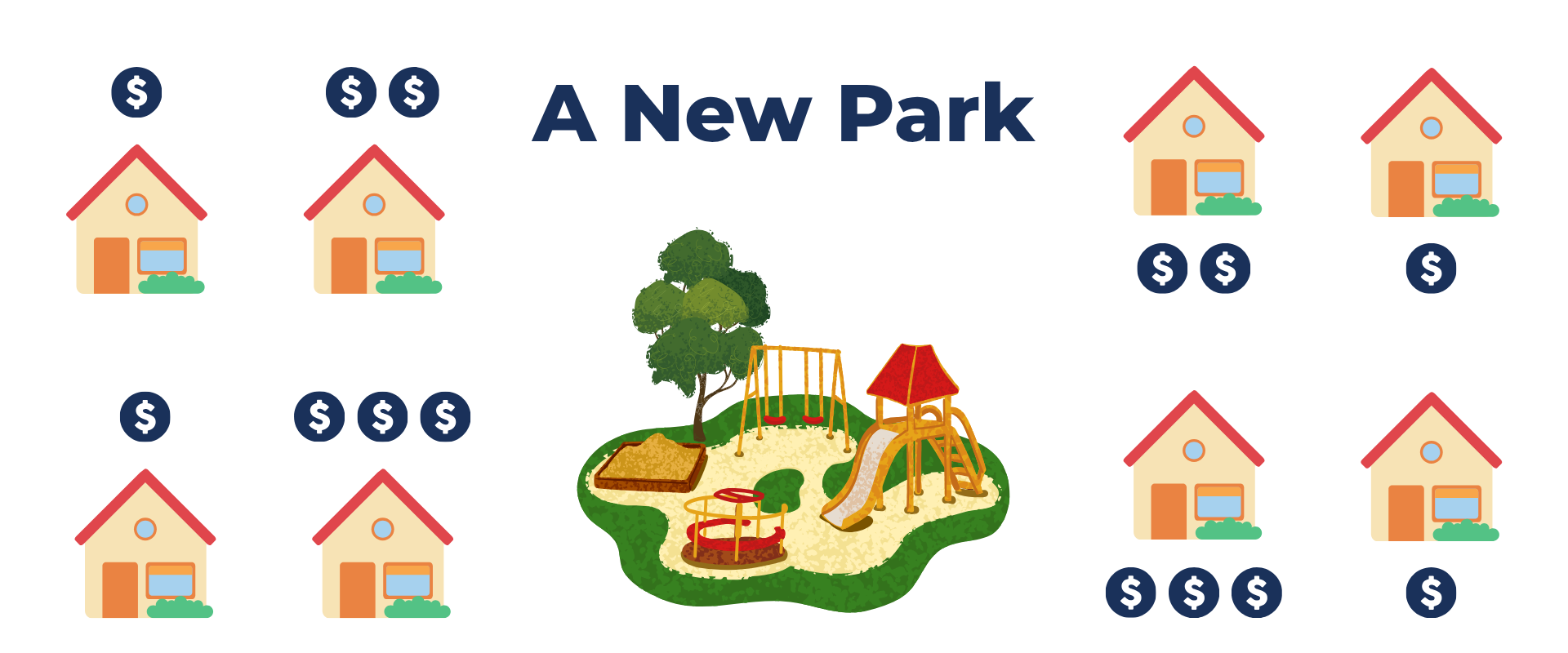
Say your neighborhood builds a park
Everyone agrees it will make the community better. How much should each family pay?
At first they decide to split the bill equally. Seems fair enough.
So they build the park. People see it and decide they want to live in the neighborhood with the new park. They begin buying homes in the area. That demand pushes up property values. But not equally. Some properties grow more than others.
Your home is worth twenty thousand dollars more than it was. Your neighbor's home down the street is worth sixty thousand more. Both increases came from the same park. Same local investment. But one household benefited three times as much as the other.
So should these neighbors still split the bill equally? Should the person who gained sixty thousand pay exactly what the person who gained twenty thousand pays?
Of course not. You pay in proportion to what you got out of it.
From one park to the whole neighborhood
Here is the part that usually gets skipped.
Your tax bill is not calculated on this year's twenty thousand dollar gain. It is calculated on what your property is worth in total.
Those are not the same thing, and the difference matters.
The park is one year's example. What your property is worth today is the accumulated result of every investment your community has ever made in the place where you live. The schools that were built. The roads that were paved. The fire protection that lowered your insurance. The courts that make your deed mean something.
Strip all of that away and your property wouldn’t be worth what it is worth now. Total current value is not separate from community investment. It is the sum of it.
That is why the bill is divided by the total value of each property rather than by this year's increase. Total value is the best available measure of how much any one property has benefited from everything the community has built.
It’s not "unrealized gains"
Of course there are people who say, “That makes property tax a tax on unrealized gains. You are taxing me on money I have not actually made.”
That is not what is happening.
A tax on unrealized gains would target the gain itself. The government would look at how much your house went up in value and take a cut of that increase. The increase would be the thing being taxed.
Property tax does not work that way. The bill for schools, parks, libraries, sheriffs, courts and jails was already there. It existed before your house appreciated and it will exist after. Somebody was always going to pay it.
Your property's value is not what is being taxed. It is the measure used to figure out your share of a bill that already exists.
Value is the measuring stick. Not the target.
The hard case
There is one objection to all of this that deserves a straight answer rather than a clever one.
Some people own property worth a great deal and simply don’t have the cash to pay the taxes on it. A retiree on a fixed income in a neighborhood that got expensive around her. A farmer whose land is worth millions on paper and who has a bad year.
Their property value went up. Their ability to pay did not.
That is a real problem, and telling you about measuring sticks doesn’t make it go away. Oklahoma has built protections into the system precisely because of it. Agricultural land is assessed on its productive use rather than market value. Homeowners sixty-five and older who meet income limits can have their valuation frozen. There is a cap on how fast taxable value can rise in a single year. There is an additional exemption for lower income households and a full exemption for totally disabled veterans.
Whether those protections are adequate is a fair fight, and one I expect Oklahomans to have this year. But notice what that argument is actually about. It is about who should be shielded from the bill and by how much. It is not an argument that measuring shares by property value is illegitimate.
Why this matters
When neighbors split the cost of something they built together, the fairest way to do it is based on who got the most out of it.
That is not a tax on a gain you have not realized. That is your share of a bill your community already agreed to pay.
You can disagree with what is on that bill. That is a real debate and one worth having. But it is a different debate than whether the method of dividing it up is legitimate.
Andy Fugate represents House District 94 in the Oklahoma House of Representatives, where he serves as Floor Leader for the House Democratic Caucus.